

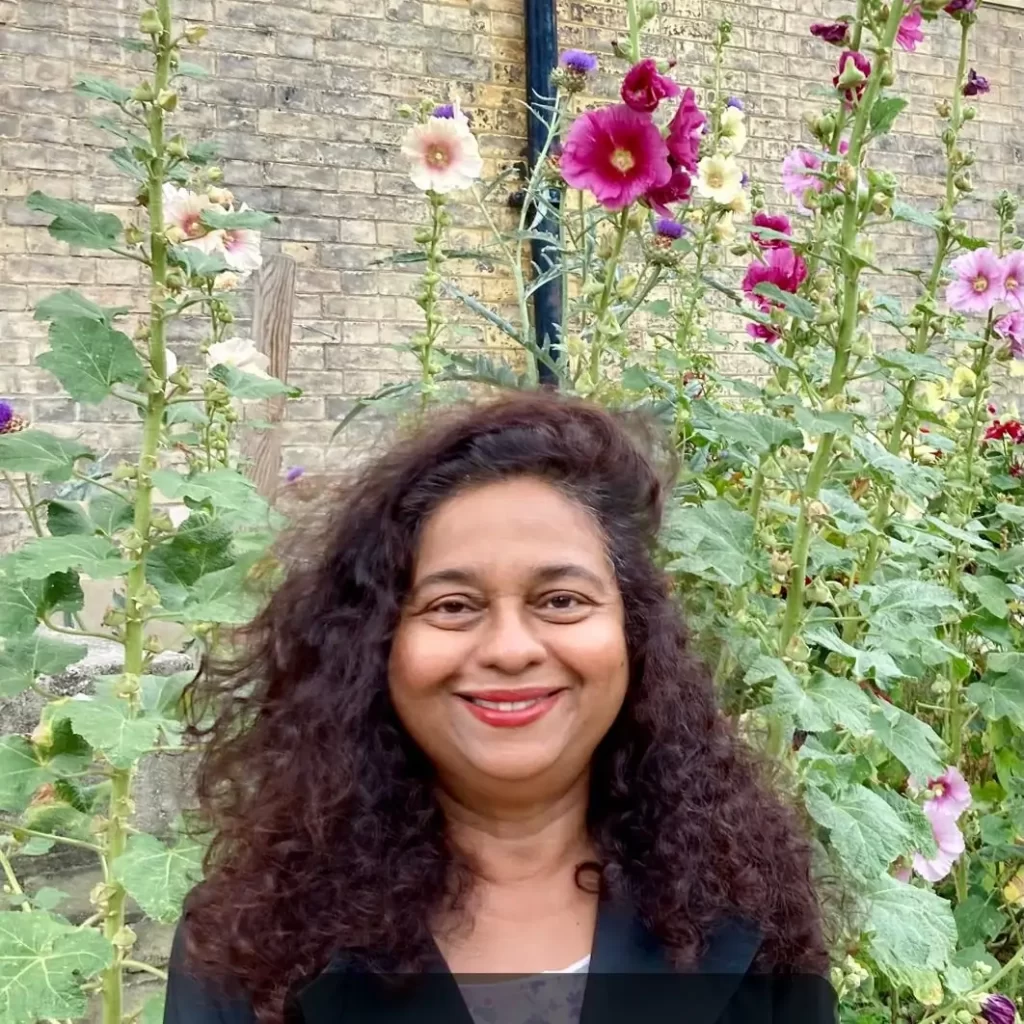
Jane is a Tamil mother, writer, and advocate who raised her now 25-year-old daughter in the UK. As a parent navigating cultural heritage, feminism, and the challenges of raising a mixed-race child, Jane offers powerful insights on what it means to raise children with both strength and softness. In this interview, she reflects on feminist mothering, cultural expectations, and the future of parenting.
What does feminist mothering mean to you and how does it differ from traditional parenting models?
Soon after my daughter, who is now 25, was born I developed an intuition for feminist mothering long before discovering that it was, indeed, an academic concept and a practice in child rearing. I didn’t want my daughter to be brought up to expect less in life due to her being female. When my daughter was about 2 the internet became a common place addition to a family home. Using my brand-new computer, I would spend hours searching for ‘how to bring up your daughter differently?’ or something along those lines. I then discovered Adrienne Rich and Professor Andrea O’Reilly’s works in feminist mothering. Their words brought to life what had been my instinct and intuition. I finally had my needs validated – to be a feminist mother.
How do you balance feminist values with cultural expectations, especially as a Tamil mother raising a mixed-race daughter?
Living in a Western country, the UK, has let me escape the harshest of Indian cultural expectations. As an example, whether and when my daughter gets married is her decision to make. If I lived in Asia, I would be viewed as a failing mother for not making her marriage a priority post university.
What are some small everyday ways parents can encourage gender equality in their homes?
There are many things Asian parents could do to fight against the traditional roles which sons and daughters were taught. As an example, sons should be taught to cook and clean the home. This is also a survival skill in an age where sons leave home to go to university. Daughters should be taught to change light bulbs, as an example. I only learnt how to change light bulbs when I was in my 40s. But more than action-oriented gender equality parenting, parents should inculcate a mind change in their children – to view women as being equals. In many Indian homes, it is still the practice for the men to eat first at family gatherings. What message does this send to children?
Many Asian cultures emphasize academic success and discipline – how can parents integrate feminist values while maintaining cultural traditions?
Feminist parenting and cultural traditions can be at odds with each other if gender stereotypes are being maintained in the home or if the traditional Asian expectation of academic success through discipline is seen as the only way to bring up children. Feminist values encourage subjective thinking – to consider what your child’s talent is and nurturing that. Not every child wants or is able to be an astronaut, for example. The cultural tradition could come into play through other ways – observing cultural celebrations through food and music, watching cultural shows or storytelling where the elders talk about their childhood and experiences. It’s a pity how cultural traditions are always transmitted through negative ways such as harsh discipline and unfair expectations of children.
How has motherhood shaped your identity, and what has changed as your daughter has grown?
Motherhood has been the means to self-discovery. It has given me the means to discover dimensions to my character on love, compassion, care and fear which I wouldn’t have discovered otherwise. Yes, fear, about my daughter’s safety in a world where violence against females is rife. As she has grown up, I have learnt to let go and let her become her own person. As parents, we have all these expectations for our kids, but feminist parenting has given me the tools to realise that my daughter is not an extension of me.
You talk a lot about midlife reinvention – how can mothers reclaim their personal identity while raising children?
Women are expected to be, almost, sacrificial in their mothering in a way which men, fathers, aren’t expected to do. Mothers still spend more time on the children than fathers do. I would advise mothers who want to reclaim their personal identity to do two things: Don’t set the expectation that you will be a saint. Always present yourself as an individual with personal needs and a desire to be seen as your own person; and pursue your work/hobbies if this is what you would like to do. It is also important to hang on to your identity because, once your children leave home, you will, inevitably, feel lost but finding and keeping your identity while they are growing up till the time they leave home will help mitigate against the huge sense of loss one feels upon becoming an empty nester.
What role do race, culture and gender play in your experience as a mother?
Race, culture and gender are intrinsic to my mothering because I have had to be very mindful of how my mixed-race daughter is always negotiating her half Indian and half White heritage in a Western world. She is white passing but very conscious of the racism which I have had to face and overcome mentally. This has upset her especially as she realises that she has white privilege despite being half Indian. From a young age, she has had to carry a sadness within her about how I have not had an easy time in a Western country. I have, in turn, worked extremely hard to role model success through adversity. This hasn’t been easy either for me. These are considerations that wouldn’t occur in a single race family living in the country of their cultural heritage. Race, culture and gender assume a prominence when you are living in a third country.
How do you think public policies and societal attitudes around motherhood need to evolve?
It is astounding how public policies and societal attitudes towards motherhood are still lagging. There is an embedded structural inequality and bias against mothers. For instance, not enough attention is paid to the cost of childcare and the state seems to think that this cost should be a private one to be borne. But if the state were to subsidise childcare a lot more, more mothers would be able to return to work and become taxpayers. Also, with falling birth rates, the state should be encouraging people to have children. Applying a capitalist lens, it’s a complete failure not to see that public policies and societal attitudes are harming the economy.
What do you think the future of feminist parenting looks like?
The future of feminist parenting is bright and will be enlightened by the progress made by, firstly, movements such as ‘MeToo’, ‘Black Lives Matter’, LGBTQ rights and the anti-colonial awareness; and, secondly, by women assuming places of prominence in public life. What this, collectively, shows is that feminist parenting encompasses many facets of life – history, politics and culture – and isn’t about the private act of parenting in the home only.
What advice would you give to new parents who want to raise strong, independent and socially conscious children?
I know that many Asian parents are very afraid of their children losing touch with their culture. This often seems to be the paramount consideration in their parenting. This feeling doesn’t just exist among Asian parents in Western countries. There is also this feeling among Asian parents in Asian countries who fear that their children are ‘too Western’. If you want your child to be a global citizen with opportunities to study, work and experience the world then an open mind devoid of cultural fear is an important facet in parenting.