
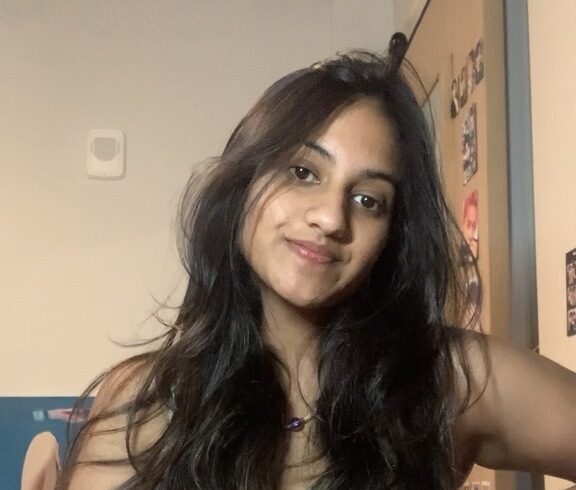
From silent childhood moments to layered visual collages, Mahak Saxena’s creative journey is rooted in vulnerability, cultural complexity, and fierce intentionality. As an artist working across editorial, video, and design, Mahak’s storytelling evolves through contradictions—expressing softness as strength and chaos as clarity. In this interview, she reflects on what drives her creativity, how culture shapes her work, and why the quietest stories often speak the loudest.
What first drew you to storytelling — and how has that passion evolved over time?
I grew up very shy and was afraid to speak. There were many moments of silence between me and my parents, and my brother, which led me to become introspective from a very young age. Creative ideas would naturally brew inside me, but I felt they were being filtered the moment I tried to say them out loud. That’s when I turned to art and writing to express myself more honestly. In turn, that helped me feel more confident and speak in public spaces. My practice is still evolving, but now I can find a word for what I’m thinking and a colour for what I’m feeling.
You’ve worked across editorial, design, and video. How do you decide which medium best fits a story?
Sometimes you need to experiment to figure out what works best. Other times, it depends on how much time or energy you have. And sometimes, the best answer is a mix of formats.
For me, it often comes down to the skill I’m trying to build. If I’m focused on improving my animation, you’ll probably see me leaning into that more. At the end of the day, a medium is just that—a way to communicate. What really matters to me is the story itself and how I’m able to use the medium to best convey it. When you focus on your own strengths instead of just following the rules of the medium, you’ll discover new and exciting ways to share your message.
What role does culture or identity play in the content you create?
My relationship with culture is complicated. Growing up in the UAE, I don’t feel as connected to my roots as someone who was born and raised in India might. Certain societal pressures and traditions have only distanced me further from my culture. This confusion has influenced my work, pushing me to break the barriers of what is expected.
I explore themes of anger, pain, and blood through a feminine but powerful lens—something fierce and transformative like the energy of Goddess Kali in Hinduism. At the same time, I aim to portray softness not as weakness but as a profound strength.
Can you share a moment when a piece you worked on sparked a meaningful reaction from someone?
I can’t point to one specific moment, but during university critiques, I often found that my work invited deeper reflection. People would question what my art conveyed and what it left unsaid. Art affects everyone differently, and hearing others interpret, challenge, or expand on my intentions was always powerful. When your work becomes a catalyst for conversation, it feels like someone is recognizing your innermost thoughts. That recognition is both eye-opening and vulnerable—sometimes uncomfortable, but always meaningful.
You often talk about “softness” and “intentional design.” What do those words mean to you in your creative process?
When I talk about “softness,” I mean vulnerability—the kind of openness that takes real strength. Being soft, to me, means embracing the messy, uncertain parts of life that don’t fit neatly into black and white, and that requires courage. In my art, I often express softness through intense emotions like anger or sudden outbursts rather than calmness and healing. Softness and strength coexist in my work, sometimes in surprising and powerful ways.
“Intentional design” means every choice I make is deliberate. It’s what transforms craft into art. My creative process is always guided by purpose and message. Nothing is random or accidental. Every detail exists to communicate something meaningful. As a result, I balance this softness with intention. Ultimately, my work lives in contradiction—holding space for opposing forces, embracing uncertainty, and navigating the thin line between softness and strength, chaos and control. It is within this tension that my work breathes and comes alive.
What’s a story or campaign you’re especially proud of — and what made it special?
One style I’m especially proud of and currently experimenting with is a messy collage approach where I combine photos of myself with tiny bits of junk and found objects from outside or the back of my drawer. This process lets me explore identity in a raw, personal way by layering fragments of memory and everyday life to create something textured and meaningful. What makes it special for me is how it transforms ordinary, discarded things into a visual story that feels both intimate and powerful. It’s a way of finding beauty and emotion in unexpected places.
How do you stay grounded and creative in an industry that can feel so fast and superficial?
I’ve worked in fashion and now I’m in a corporate job, which might not be what every artist dreams of. But these different experiences have shaped me and broadened my perspective. When I worked in an office, I longed for the freedom of working from home. When I worked from home, I missed the energy of being around people. I’ve learned that things change, and so do we, as we grow through new experiences. What used to be my dream job at 17 no longer feels like the right fit—and that’s okay.
For me, staying grounded means embracing that there is no single path or final destination. Creativity comes when I’m present in the everyday—when I notice small details like a song playing on the radio or a conversation on the metro. Those little moments are where inspiration lives. That is how I keep my work fresh and meaningful despite the fast pace and surface-level noise of the industry.
If you could tell one story to the world right now — what would it be about, and why?
Right now, what feels important to share is the power of quiet moments, the silences, and the space for introspection. When we’re constantly distracted or afraid to face difficult emotions, they don’t disappear. They rot inside us and shape our daily lives in intricate ways. It’s okay to feel anger, pain, or vulnerability. These are parts of being human—not weaknesses.
My story is about finding strength in softness, expressing what’s often left unsaid, and using creativity to make sense of the messy, complex parts of life. I hope my work encourages others to speak their truth, even if it’s uncomfortable—whether in words or through a work of art—and to find beauty and meaning in the contradictions we all carry.