
I think that we can all agree that the planning and preparation for the holiday season, regardless of what holidays you celebrate, can be overwhelming for a lot of us.
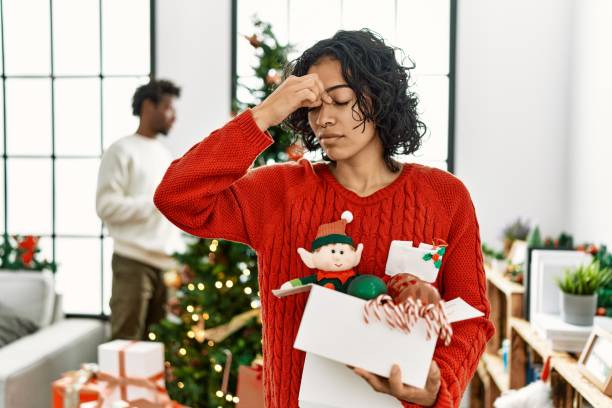
While those of us in intercultural relationships may experience additional, unique stress, it doesn’t have to be that way.
Whether the relationship is familial, romantic, or a friendship, the focus should remain the same: honoring the other person’s traditions and heritage while enjoying the process of making new memories.
From my experience, adults and parents spend the bulk of their time trying to make the holidays special for their kids.
For children, the start of the holiday season often brings a sense of nostalgia and comfort. A yearning for childhood wonder and magic, hoping the chill in the air means incoming snow and a day off from school, enjoying hot chocolate, and waiting for Santa to come.
Of course, now that I am an adult, that nostalgia is accompanied by a healthy dose of stress from all the planning the season entails. Borrow a page from your child’s book and try to enjoy the season and time with loved ones.
Taking on the role of host or the family “leader” in charge of celebrations is certainly daunting, even more so when there are multiple cultural holidays to be celebrated. Embrace the changes and remember that it is a privilege to be in a position where you can add more celebrations to your life.
This year in particular, the past several months have looked quite different for me. Growing up in the United States and celebrating traditional Western holidays, the “holiday season” always began in late November with Thanksgiving. But thanks to my partner, the festivities started early this year with Diwali in October. I had never celebrated Diwali before, but growing up in India and coming from a Hindu background, it was an important tradition for my partner.
Likewise, before this year, he had never enjoyed a roasted turkey with all the fixings on Thanksgiving, and certainly had never gone through the particular rituals of Christmas preparation, from decorating and buying gifts to admiring light displays and enjoying baked goods.
From my experience, intercultural relationships do take a little extra work and understanding, but blending holiday and cultural traditions doesn’t have to be a headache.
Our holidays and customs are not in competition with one another.
I look at it as adding something to my life instead of taking something away, because that is exactly what it is. Why wouldn’t I want more holidays to celebrate? Celebrating Diwali does not mean we cannot also celebrate Thanksgiving or Christmas. Blending cultures and traditions is a necessary and meaningful way of building a life together.
Here are some strategies that can make holiday celebrations simpler.
Look for Similarities
There may be more similarities between holidays than you might think. For example, take Diwali and Christmas. Both are distinctive in their own right, but at their core, family, food, and light are central to their celebrations.
Shopping for Diwali decorations, a festival of light celebrating the triumph of good over evil, was a first for me, but it was something I genuinely enjoyed. It gave me insight into a part of my partner’s life and culture, and it was an opportunity to learn more about his childhood traditions and the significance of the holiday in Indian culture.

I was determined to go all out for Diwali. Since my partner does not have any family close by to celebrate with, we started preparations from the ground up together. We visited a local Indian grocery store to pick up Diwali wall hangings, a diya for each of us, candles to burn, and of course, sweets.
The hunt for the perfect decorations reminded me of the care my mother put into gathering Christmas decor during my childhood. Going all in and being involved was a large part of what made celebrating so special.
Knowing that the effort meant a lot to my partner, and that the process allowed me to learn more about the celebration along the way, increased my excitement for the holiday.
I imagine this enthusiasm would go a long way in modeling behavior for children learning how to celebrate holidays from both parents’ cultures. Involving everyone in the preparation makes the holiday more meaningful and facilitates learning about its significance from the ground up.
Lead with confidence, and the rest will follow.
Appreciate Differences
On that same note, it is important to value differences in traditions as well.
Attempting to blend holidays can sometimes result in one being favored over another. Sacrifices in tradition do not need to be made in order to celebrate multiple events.
Tradition and culture are special and deserve to be recognized and celebrated independently.
Instead of combining multiple holidays that fall around the same time, consider celebrating each on its respective day to ensure equal importance is given to both. This can also minimize confusion for children, as having separate celebrations helps prevent holidays from blending together and reinforces the importance of each one.
Refraining from showing favoritism toward a single holiday ensures children grow up appreciating both equally.
Create Special Traditions for the Next Generation
I do not have personal experience navigating an intercultural holiday season with children, but I do not foresee it being a tremendous challenge. After all, what child would be upset about having more holidays to celebrate?
While double the number of holidays may seem daunting or exhausting at first, after the first year or two, you will find your rhythm. It will feel normal, because it is. These become new traditions for a new family, shaped by a blend of both backgrounds.

As long as we have patience, look to our partners for guidance, and lead celebrations with excitement for children, new traditions will form with ease and love.
To anyone preparing to celebrate holidays from multiple cultures this year, good luck and have fun.
Remember, it is not going to be perfect the first time, and that is okay. Celebrations in multicultural relationships and families may look different from how you grew up celebrating holidays, but that is the point.
You are adding new celebrations and traditions to your family and children, and that is what matters. For those stressing about the planning, keep children at the heart of the holiday and you are already halfway there. Call upon your favorite memories from childhood celebrations and do your best to recreate that magic.
It will only be amplified by the joy of celebrating even more traditions together.