
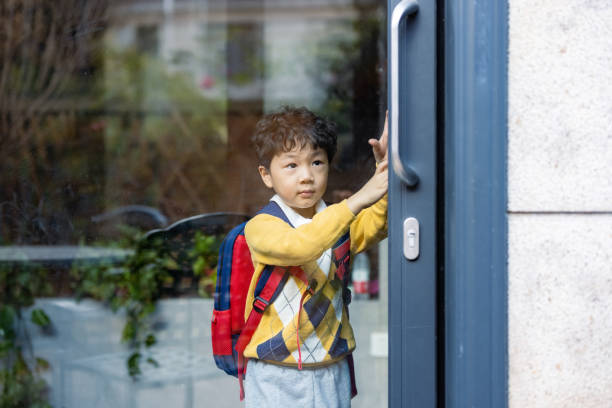
Every August, the stores fill with sales signs and backpacks. Timetables are printed, lunches packed, pencils sharpened.
But for millions of kids in multicultural families, back-to-school isn’t just about getting ready for class.
It’s about stepping back into a system where they’re often misunderstood, overlooked, or subtly pressured to leave pieces of themselves behind.
It’s not just back to school. It’s back to code-switching.
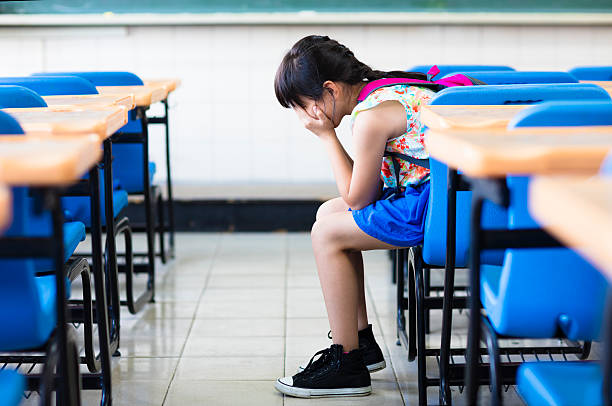
Back to pronouncing your name the way others say it—even if it’s wrong.
Back to wondering if your lunch smells weird.
Back to feeling like your real self doesn’t quite fit.
I know because I’ve lived it. But this isn’t just my story—it’s a pattern.
And unless we start talking about it, naming it, and doing something about it, we’re going to keep sending kids back to classrooms where they learn more about how to survive school than how to thrive in it.
The Quiet Curriculum We Don’t Talk About
On paper, I was the ideal student.
Asian American. Straight A’s. Respectful. Well-behaved. Never caused problems.
But I wasn’t truly seen.
Because beneath the surface, I was navigating a different kind of curriculum—the invisible kind. The lessons no one teaches you but you pick up fast:
- Don’t raise your hand too much.
- Don’t correct the teacher when they say your friend’s name wrong.
- Don’t speak Chinese in the hallway.
- Don’t bring dumplings to lunch. Bring a sandwich. Better yet—Lunchables.
As a kid, I wanted those pre-packed American meals not because I liked them, but because I didn’t want to stand out.

Because “being different” in a classroom, even a nice one, often means feeling like you’re less.
I was athletic. Really athletic. I had a wicked jump shot, quick reflexes, and the drive to back it up. But year after year, I was overlooked. Picked last for teams.
Treated like I’d break in half. People didn’t see me. They saw “the quiet Asian kid.” And when I proved them wrong, it was always a surprise—never an expectation.
It’s subtle. But it cuts deep.
And the deeper cut? I wasn’t alone.
Identity Isn’t Left at the Door
When multicultural kids walk into school, they don’t just carry backpacks. They carry names that get shortened. Languages they’re told not to speak. Family stories no one asks about. And identities that are either ignored—or flattened into stereotypes.
We talk a lot about academic readiness. But what about identity readiness?
What does it mean for a child to enter a space that doesn’t reflect their family, their culture, or their way of learning?
And what happens when the quietness of an immigrant child is mistaken for disengagement, rather than adaptation or respect?
Educators aren’t villains here.
But many are part of a system that unconsciously rewards assimilation and sidelines difference. The norms around participation, “proper” behavior, even lunchroom interactions—all carry invisible cultural weight.
Take names, for example.
Mine is easy—Eric Chang. But I’ve watched friends flinch as teachers stumble through theirs, asking, “Do you have a nickname?”
What they really mean is: Can you make yourself more convenient for me to say?
That one small moment teaches a big lesson: Your identity is optional. Mine is standard.
Classroom Culture Is Not Neutral
There’s this idea that classrooms are equal spaces—that everyone walks in with the same shot at success. But research tells us otherwise.
According to studies on social identity and school belonging, students from non-dominant backgrounds often experience microaggressions, lowered expectations, and fewer opportunities to express their whole selves.
Even praise can be coded.
A quiet white student is “thoughtful.”
A quiet Asian student is “shy.”
A loud white student is “a leader.”
A loud Black or Brown student is “disruptive.”
These patterns don’t just impact self-esteem. They impact achievement, relationships, and the likelihood of speaking up when it matters.

And it starts early.
That’s why back-to-school season is such a critical moment—not just for logistics, but for redefining culture. Not just what we teach, but how we teach. And who we’re teaching it to.
What Multicultural Kids Need This Fall
This fall, while you prep your syllabi, organize your seating charts, or finalize the curriculum—here’s what else to think about:
1. Representation Isn’t Just About Posters
It’s about who you highlight in your lessons. Whose stories get told. Whose holidays get acknowledged. Make space for kids to share about their cultures, not just learn about “others.”
2. Identity-Affirming Routines Matter
Something as small as morning check-ins, sharing food traditions, or letting kids talk about how they celebrate the New Year (whichever one they celebrate) makes a difference. These are the rituals that say: You matter here.
3. Reframe “Good Behavior”
What you call “respect” might be another family’s “disengagement.” Learn how different cultures view eye contact, silence, questions, and participation. Don’t mistake cultural norms for personality flaws.
4. Name Pronunciation = Identity Respect
Learn it. Say it right. And if you mess up, apologize and try again. That single action can restore dignity and prevent a lifetime of self-erasure.
5. Family Is a Resource, Not an Obstacle
Sometimes teachers see immigrant families as “uninvolved” because they don’t show up to school events or speak English fluently. But behind the scenes, those same families are teaching resilience, sacrifice, and cultural pride every day. Let their voices into the classroom.
The Bigger Picture
When we talk about education reform, we often talk about test scores, funding, or class size.
But sometimes the most radical reform is emotional:
Creating classrooms where kids don’t have to choose between being successful and being themselves.
This year, let’s not just ask: Are you ready for school?
Let’s ask: Is school ready for you?
Let’s make sure kids aren’t checking their identities at the door.
Because they deserve to be more than “a good student.”
They deserve to be seen.