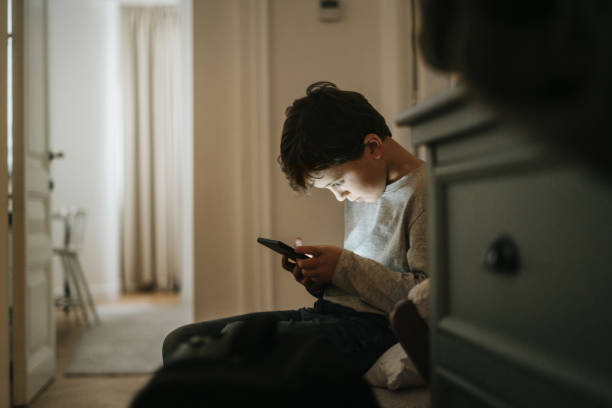


At home, I was quiet.
The respectful son who followed instructions, didn’t interrupt, and knew that talking back wasn’t an option. I rarely challenged my parents, and I definitely didn’t push boundaries.
My parents would have described me as shy, disciplined, maybe even a little reserved.

At school, I was loud. Outgoing. The kid who cracked jokes with friends, spoke up in class, and sometimes got in trouble for talking too much or not paying attention.
The gap between those two versions of me wasn’t just noticeable. It shocked my parents.
Whenever a teacher called to say I had been disruptive, they thought the school had made a mistake. “Our Eric? Are you sure you have the right kid?”
But there was no mistake. I was just doing what so many kids from multicultural families do. I was living two different lives.
Why Kids Switch Between Worlds
This isn’t about being fake. It’s about knowing the rules in each space and adjusting to survive in both.
Code-switching Beyond Language
Most people think code-switching is about how you talk. But it is more than that.
It is changing the way you act, your tone, your humor, even your body language. At home, in a lot of Asian households, being a “good” kid means being respectful, modest, and calm. You don’t interrupt. You don’t draw too much attention to yourself.

At school, those same traits might be seen as being disengaged or shy. So kids adapt. They get louder, more outgoing, more visible. They make sure they are not invisible in a classroom where participation is often tied to success.
The Acculturation Gap
In immigrant families, kids often pick up the cultural rules of school faster than their parents do.
This is called the acculturation gap.
At school, kids learn the unwritten rules of friendship, humor, and social life. When they bring that home, it can look unfamiliar or even “wrong” to their parents.
Parents might see their child acting “different” and worry they are losing touch with their roots, when really, the child is just blending in at school.
Living in a Third Culture
Some kids spend so much time moving between two different worlds that they end up creating a third one for themselves.
It is not exactly the culture of their parents, and it is not exactly the culture of their peers.
It is a mix.
Over time, this can make them adaptable and open-minded. But as a kid, it can also feel like you never fully belong in either place.
The Emotional Cost
Switching roles all the time takes a toll.
It’s tiring. Kids are always monitoring themselves. What is okay to say here? How am I supposed to act in this situation?
It splits your identity. You start to feel like you have two different selves that cannot exist in the same space. Friends from school and people from home never really meet.
It confuses the adults. Parents and teachers both think they know the “real” version of the child, but neither gets the whole picture.
My Story
I remember sitting at the dinner table after my teacher had called home. I had been talking during class, not listening to instructions. My parents were confused and a little upset. “Why would you do that? You’re not like that here.”
And I didn’t know how to explain it. How could I say that being loud at school didn’t mean I was being bad? It meant I was part of the group. At home, loudness meant disrespect. At school, it meant you belonged.
It felt like I was holding a secret. I wasn’t trying to hide anything, but I knew that neither side would fully understand the other.
What Adults Can Do
For parents
- Ask questions without judgment. Instead of “Why are you acting like that” try “What is it like for you at school”
- Share your own stories about acting differently in different spaces
- Let your child know that it is okay to have different sides to themselves
For teachers
- Learn about the cultural norms your students might be following at home
- Give quiet students other ways to participate besides speaking up in front of the whole class
- Share positive stories with parents so they see more than just discipline notes
For both
Make it safe for kids to bring all parts of themselves into the same room. Let them know they do not have to keep switching between two identities.
Why This Matters for Back-to-School
The start of a school year is not just about new pencils and backpacks. For a lot of kids, it is also about stepping back into this balancing act. New teachers, new classmates, new rules to navigate at school and at home.

The goal is not to make kids pick one version of themselves. The goal is to help them feel comfortable bringing both sides together. When we bridge that gap, kids don’t feel like they are hiding who they are.
I was not pretending at school, and I was not pretending at home. I was adapting. But no kid should feel like belonging in one place means losing part of themselves in another. This year, as we get ready for back-to-school, we should be preparing our homes and classrooms to welcome every version of our kids.
Because the truth is, they are all real.