
Let’s be real — teaching kids to say “sorry” and actually mean it is tough.
Sometimes they mumble it out like a robot, other times they flat-out refuse. And sometimes they shout it mid-tantrum with all the sincerity of a soggy rice cracker.
So how do we teach our kids to apologize in a way that actually builds empathy, accountability, and stronger relationships?
Let’s start by asking ourselves: what’s the point of an apology?
In so many Asian households (including mine), apologies were a social obligation — expected, formal, and sometimes emotionally hollow.
You said sorry out of respect, to save face, or to smooth things over — even when you didn’t fully understand why. And while there’s value in that harmony-seeking instinct, it often skips the inner work that turns regret into growth.
As a kid, I remember being told “Say sorry to your sister.” So I did. But no one ever sat me down and said, “Here’s what she might be feeling. Can we talk about what happened?”
That’s where I think we can do better with our own kids.
Don’t Force It — Guide It
It’s tempting to jump in with “Go say sorry right now!” when your kid does something hurtful. But research (and experience) tells us that forced apologies don’t help kids reflect — and often make them more defensive.

Instead, the first step is to pause. Let the emotion settle. Then lead with curiosity, not correction.
Try:
- “What happened just now?”
- “How were you feeling when you did that?”
- “How do you think your friend/sibling felt?”
This isn’t just about fixing the moment — it’s about building emotional fluency. When we give kids the words and space to reflect, we teach them that making a mistake doesn’t mean they are bad — it means they’re human.
And humans get to grow.
S.O.R.R.Y. — A Framework That Actually Works
One of the most practical tools I’ve come across is the SORRY method by Amanda Morin from Understood.org. It breaks down a genuine apology into five teachable steps:
- S – Stand up. Acknowledge what happened.
“I’m sorry I knocked over your blocks.” - O – Own it. Take responsibility for your role.
“I did it because I was upset. - R – Respond differently. Reflect on a better choice.
“Next time I’ll ask for a turn instead. - R – Repair the damage. Offer to make things right.
“Can I help you rebuild it? - Y – Yield to their feelings. Accept that they might still be hurt.
“It’s okay if you’re still mad. I get it.”
It’s simple, but incredibly effective. Kids want to do better — they just need tools, not shame.
What If My Kid Says Sorry Too Much?
On the flip side, some kids — especially in high-pressure, perfectionist environments — start saying sorry for everything.
For existing. For asking questions. For dropping a spoon.
In Asian American families, where respect and humility are emphasized, this can happen a lot. But over-apologizing doesn’t signal accountability — it signals anxiety.
So teach your child the difference between guilt and regret. Guilt says “I’m bad.” Regret says “I made a mistake, and I can make it better.” Apologies should come from a place of connection, not fear.
You can help by modeling this yourself:
Instead of: “Sorry I took so long.”
Try: “Thanks for waiting. I appreciate your patience.”
For Toddlers: It’s Not About the Words
If your child is two or three and doesn’t fully understand what sorry means yet — that’s okay. Emotional understanding is still developing. At this stage, focus on modeling, naming feelings, and giving choices.
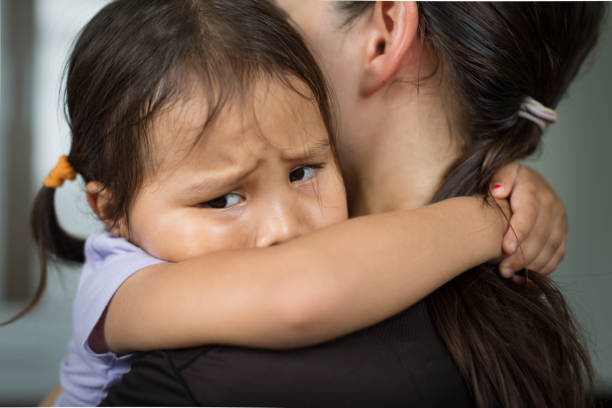
Example: “You hit your friend. Look — she’s crying. Let’s check on her. Can you offer her a hug or your toy?”
Sometimes a hug is an apology. Sometimes it’s sitting beside someone in silence. Sometimes it’s sharing the last grape. Show them what care looks like in action.
Apologies Are About Repair, Not Redemption
Here’s the hardest truth for a lot of us — especially those of us raised to fear disappointment:
A genuine apology doesn’t guarantee forgiveness.
And it shouldn’t. Your child isn’t apologizing to erase what happened. They’re doing it to take ownership of their actions and offer repair. That’s a big emotional skill — and one that will help them build healthy friendships, strong boundaries, and empathy for life.
Final Thoughts
The best way to teach your kid to apologize?
Apologize to them.
“I got frustrated and yelled. That wasn’t fair to you. I’m sorry. Next time I’ll take a deep breath before speaking.”
Our kids mirror what they see. And when they see us own our mistakes, reflect with humility, and make it right — they learn that apologies aren’t a weakness.
They’re a superpower.